Retail Management System
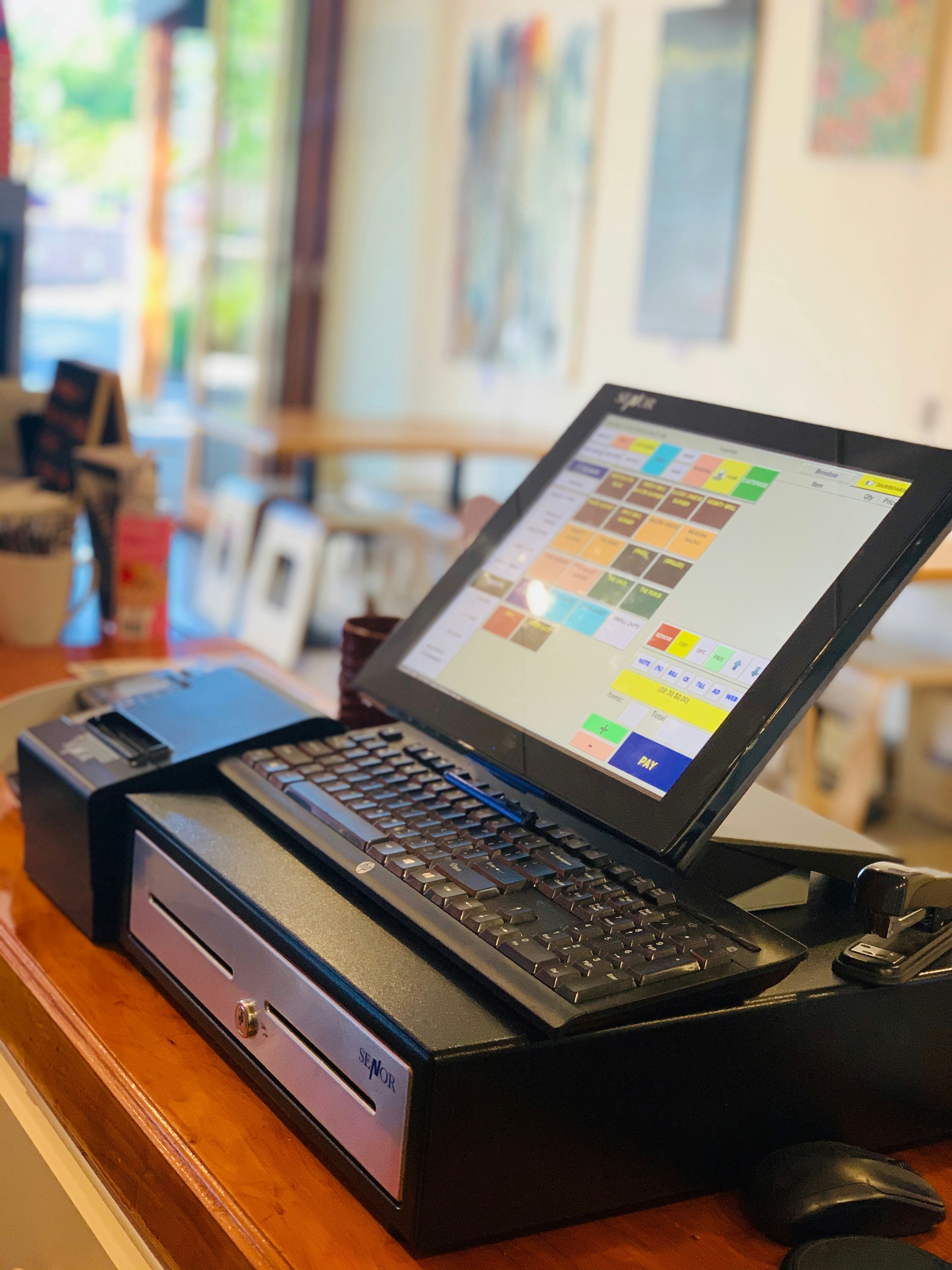
Retail Management System
Running a retail business involves much more than selling products. From purchasing and inventory management to point-of-sale operations, customer management, accounting, and reporting, every part of the business needs to work together.
A Retail Management System provides a centralized platform for managing these operations, giving businesses real-time visibility into stock, sales, purchases, customers, suppliers, and financial performance.
Whether you operate a single shop, supermarket, wholesale outlet, electronics store, fashion business, pharmacy, or a chain of retail branches, a well-designed retail management system helps simplify daily operations while providing the information needed to make informed business decisions.
Point of Sale
The Point of Sale (POS) is at the heart of retail operations. A retail management system provides a fast and intuitive interface for processing customer transactions while automatically updating inventory and financial records.
Sales staff can search for products, scan barcodes, apply discounts, select payment methods, and generate receipts directly from the POS.
The system can support multiple payment methods, including cash, bank payments, mobile money, cards, and other configured payment options. Sales are recorded immediately, allowing management to monitor transactions and revenue without waiting for manual reports.
Inventory Management
Effective inventory management is essential for any retail business. Too much stock ties up capital, while insufficient stock can result in lost sales.
A retail management system provides real-time visibility into inventory across stores, warehouses, and other locations. Businesses can track:
- Current stock quantities
- Stock received and issued
- Stock transfers between locations
- Product costs and selling prices
- Stock adjustments
- Damaged and expired products
- Reorder levels
- Product movements and transaction history
Inventory movements can be automatically linked to sales and purchases, reducing the need for manual stock updates and improving inventory accuracy.
Purchasing and Supplier Management
Retail businesses need an efficient way to manage suppliers and replenish inventory. A retail management system can manage the complete purchasing process, from supplier quotations and purchase orders through goods receiving and supplier invoicing.
Businesses can maintain supplier records, track purchase prices, monitor outstanding supplier balances, and review purchasing history.
Purchasing data can also be used to identify changes in supplier prices and evaluate purchasing patterns, helping businesses maintain appropriate margins.
Multi-Branch Management
For businesses operating multiple shops or branches, managing inventory and sales independently can make it difficult to obtain a complete picture of the business.
A centralized retail management system allows multiple locations to operate from the same system while maintaining separate stock locations and operational records.
Management can monitor sales and inventory across branches, transfer stock between locations, compare branch performance, and consolidate financial information.
This provides greater control as the business expands.
Product and Pricing Management
Retail businesses often manage hundreds or thousands of products with different prices, categories, brands, units of measure, and suppliers.
A retail management system provides a centralized product catalogue where businesses can maintain detailed product information.
Products can be organized into categories and configured with:
- Product codes and barcodes
- Product descriptions
- Units of measure
- Cost prices
- Selling prices
- Tax information
- Product categories
- Reorder levels
- Multiple suppliers
- Product variants
Different pricing structures can also be configured where required, allowing businesses to serve retail customers, wholesale customers, corporate clients, or other customer groups using appropriate pricing.
Customer Management
Customer information can be maintained within the same system used to process sales.
Businesses can maintain customer profiles, transaction histories, outstanding balances, invoices, payments, and other relevant information.
For businesses that sell on credit, the system can also help monitor customer receivables and outstanding invoices, providing greater visibility over amounts owed by customers.
Customer purchase history can provide useful information for understanding buying patterns and supporting customer retention initiatives.
Accounting Integration
Retail operations and accounting should not exist as separate systems.
A properly integrated retail management system connects sales, purchases, inventory, payments, expenses, receivables, payables, and accounting records.
A completed sale can automatically generate the appropriate accounting entries while inventory movements can update stock valuation.
Management can therefore obtain financial information based on actual business transactions rather than relying on manually prepared spreadsheets.
- Sales revenue
- Cost of goods sold
- Gross profit
- Customer receivables
- Supplier payables
- Inventory valuation
- Cash and bank balances
- Expenses
- Tax information
- Profit and loss
Stock Transfers and Adjustments
Retail businesses frequently need to move products between stores, warehouses, and other locations.
A retail management system provides controlled stock transfer processes that allow users to request, approve, dispatch, and receive inventory.
Stock adjustments can also be recorded for situations such as damaged goods, losses, breakages, expired products, counting differences, or other legitimate inventory corrections.
Every movement can be recorded in the system, creating an audit trail that helps management understand how inventory changes over time.
Barcode Management
Barcode support makes retail operations significantly faster and more accurate.
Products can be assigned barcodes that allow sales staff to identify items quickly during checkout. Barcode scanners can also be used during receiving, stock counting, transfers, and inventory management.
This reduces manual data entry and minimizes errors when handling large product catalogues.
Expenses and Operational Costs
Retail profitability depends not only on sales but also on controlling operating costs.
A retail management system can record expenses such as rent, utilities, transport, salaries, maintenance, advertising, and other operating costs.
When integrated with accounting, these transactions can be classified appropriately and included in financial reporting, giving management a more accurate view of the actual cost of running the business.
Reports and Business Intelligence
A retail management system turns daily transactions into useful business information.
Management can access reports covering sales, inventory, purchasing, customers, suppliers, cash flow, and profitability.
Common reports include:
- Daily and monthly sales
- Sales by product
- Sales by category
- Sales by branch
- Sales by salesperson
- Gross profit
- Cash and payment reports
- Stock valuation
- Fast-moving products
- Slow-moving products
- Low-stock products
- Purchase analysis
- Customer balances
- Supplier balances
Dashboards can provide an overview of business performance without requiring management to manually compile information from different sources.
User Access and Internal Controls
Different employees have different responsibilities within a retail business.
A retail management system can therefore provide role-based access controls that determine what individual users can view or modify.
For example, sales staff may be allowed to process sales but not change product costs, while store managers may have access to stock adjustments and reports.
Administrative and accounting users can be given broader access according to their responsibilities.
These controls help protect business information and establish accountability.
Supporting Business Growth
A retail management system should not only solve today's operational challenges; it should also provide a foundation for future growth.
As a business expands, it may add new products, employees, branches, warehouses, suppliers, and customers. A centralized system makes it possible to manage this increasing complexity without continuously adding manual processes and disconnected spreadsheets.
By bringing sales, inventory, purchasing, customers, suppliers, and accounting together, businesses gain a unified view of their operations.
A Complete Retail Management Platform
Modern retail requires speed, accuracy, and visibility. Managing sales, inventory, purchasing, and accounting separately can create duplicated work and make it difficult to determine what is actually happening within the business.
A Retail Management System brings these functions together in one platform.
From the moment products are purchased and received into inventory, through their movement between locations and eventual sale to a customer, the system can maintain a connected record of the entire transaction.
The result is a more organized retail operation, better inventory control, improved financial visibility, and access to the information management needs to run and grow the business.
Ready to transform your business?
Let’s talk about your goals, challenges, and opportunities—and explore how the right ERP solution can help you work smarter, operate more efficiently, and grow with confidence.
Call Us or you can Book A Call